This may be of interest: https://www.mdpi.com/1660-4601/17/20/7361?utm_source=releaseissue&utm_mediu…
Götschi, T.; Kahlmeier, S.; Castro, A.; Brand, C.; Cavill, N.; Kelly, P.; Lieb, C.; Rojas-Rueda, D.; Woodcock, J.; Racioppi, F. Integrated Impact Assessment of Active Travel: Expanding the Scope of the Health Economic Assessment Tool (HEAT) for Walking and Cycling. Int. J. Environ. Res. Public Health 2020, 17, 7361.
This may be of interest. health is an identified topic area as well.
-------- Forwarded Message --------
Subject: WSTLUR: Call For Papers
Date: Fri, 9 Oct 2020 12:01:00 -0400
From: Steve Bert <sabert(a)ncsu.edu>
Good morning,
A call for papers is being issued for the 2021 World Symposium on
Transport & Land Use Research (WSTLUR).
Please find information below and attached.
----
*2021 World Symposium on Transport & Land Use Research (WSTLUR)*
*Call for Papers *
*August 9-13, 2021 *
*Portland, OR USA*
*wstlur.org* <http://wstlur.org/>
We are pleased to announce that the 2021 World Symposium on Transport
and Land Use Research (WSTLUR) has been rescheduled and will be held in
Portland, Oregon, USA from August 9-13, 2021. Given the uncertainty
ahead, we are planning for a hybrid conference - with in-person and
remote engagement, with contingencies for a totally online conference if
necessary. We seek original papers on the interaction of transport and
land use from the broad set of disciplines. Papers must be submitted by
January 15, 2021. WSTLUR membership is not required to submit a paper.
Each conference registrant may be a co-author on multiple papers, but
there is a limit of one presentation per registrant. Detailed submission
instructions and conference information will be available on the WSTLUR
website (http://www.wstlur.org/). Please check regularly for updates.
Sessions will be developed from high-quality papers received. Authors of
a select number of papers will be invited, based upon their conference
reviews, to submit their paper for review for publication in the
/Journal of Transport and Land Use/.
Due to the postponement of WSTLUR 2020 due to COVID-19, authors who
submitted papers to the original call for papers may resubmit the same
papers for consideration, as long as they have not been presented
elsewhere. These resubmissions will retain the same reviewers for
continuity in the process; however, we do ask that authors explain what
changes, if any, have been made to the paper since the last review.
We are specifically interested in seeking papers from the 10 tracks,
described below. In addition to a track, we encourage papers that fit
into one or both of these two new cross-cutting themes. We recognize
that papers on these topics may fit into any of the track topic areas.
*Cross-cutting Themes*
Social Justice and Racial Equity - Equity and justice are central to all
areas of transportation and land use research. WSTLUR is committed to
elevating these issues and we encourage papers that address this theme
in all of our tracks below.
COVID-19 - The global pandemic has had a profound impact on our lives.
WSTLUR 2021 would like to highlight papers that explore the
transportation and land use connections to the spread of COVID-19, its
impacts, and potential preventative measures across any of our tracks
below.
*Paper Tracks*
Housing and transport *-* This track explores the various links between
housing development, location choice, and travel outcomes, including
both affordable and market rate housing. Topics include but are not
limited to the broad areas of housing development process, parking
provision & automobile ownership, housing constraints and neighborhood
choice, gentrification and travel, self-selection bias, and housing
value and transportation amenities.
Networks and land use* -* Land use and transport networks co-evolve. How
does the growth (or decline) in transport networks influence land use
patterns, and vice versa? How do network structure and land use patterns
affect accessibility? How can future design consider transport networks
and land use patterns together as technology changes?
Integrated Land Use-Transport Models* -* This theme calls for papers
that integrate land use models with transport models. All levels of
integration from loosely coupled to tightly integrated are welcome, as
long as information from one model is used in the other model. We are
looking in particular for novel model designs, new ideas for model
integration and models that use innovative data sources.
New Mobilities* - *How do newly emerging disruptive technologies shape
or change transportation and land use systems? How can we integrate
technological and land use strategies to achieve long term planning
goals? What is the role of land use in smart cities? Specific topics
include the connection between land use and transportation systems with
Information and Communication Technology (ICT) and new ICT-enabled
products and services such as automated vehicles, new energy
technologies, big data applications, ridesharing systems, real-time
traveler information, and smart cities in general.
Freight Issues* – *Freight demand is becoming more diverse with
e-commerce derived flows adding to the more traditional freight
movements. These flows, destined for both residential and office
locations, and including a new range of commodities (e.g. groceries and
fast food), are creating both challenges and opportunities for shippers,
carriers and retailers. New logistical processes are being introduced to
address changes in freight demand, for example, parcel lockers, mobile
distribution centers, and new modes of freight transportation such as
autonomous freight delivery.
Latin America* - *As the Global South region with the highest rates of
urbanization and very
high levels of income inequalities, Latin America can provide leading
examples and cautionary tales regarding land development and urban
transportation. Diverse papers on Latin America are welcome, although we
are interested in contributions that examine: Land development impacts
of transport sector policy reform, transportation and travel behavior
impacts of land and land use policies, health effects of transportation
and built environment investments, specific cases of transport and land
use integration around mass transit, and evaluation of national and
regional incentives (financial or otherwise)
aimed at encouraging increased transport and land development integration
Accessibility and Quality of Life* (*NECTAR Special Session) -
Accessibility, the ease of reaching destinations, is a comprehensive
performance measure to monitor the land use and transport systems
performance in any region around the world. Transport planners across
the globe often advocate transport investments to increase accessibility
and promote (local or regional) economic development. A more
comprehensive approach would be to promote quality of life. The goal of
this session will be to explore the relationship between accessibility
and quality of life and how planning for accessibility can improve the
quality of life for individuals in a region.
Public Transportation**- The focus of this call is to share innovative
and novel ideas about the next generation public transport systems. The
increasing demand and range of urban mobility make public transport
systems a critical solution in accelerating the transition to
sustainable urban development. With the development of new tools,
technology, ubiquitous data, and new transit modes (e.g., paratransit,
shared mobility, and micro-mobility), the planning and operation of next
generation public transport systems becomes an emerging question for
researchers, planners, operators, and decision makers.
Emerging Data & Technologie*s* *- *The ever-evolving emerging data and
technologies such as Connected and Autonomous Vehicles (CAVs), Electric
Vehicles (EVs) and shared mobility have offered both opportunities and
challenges for the transportation profession. This “emerging data and
technologies” theme calls for bold and a variety of papers that touch
upon a wide variety of topics relating to emerging data and technologies
and how
Health**- The links between transportation, the built environment, and
health are many - air quality, crashes, physical activity, stress,
noise, e.g. In this call, WSTLUR welcomes papers from a variety of
disciplines that establish correlations and causal links, model
outcomes, test policies, and build theories across the broad range of
ways health intersects our transport and land use.
-----
*Steve Bert, AICP <https://sites.google.com/ncsu.edu/stevenbert/home>*
Team Lead, Economics & Policy Assessment Group
Institute for Transportation Research and Education (ITRE)
North Carolina State University - Centennial Campus
Raleigh, NC 27695-8601
Office: (919)-515-8717
Mobile: (919)-263-4062
Personal: (217)-721-4160
sabert(a)ncsu.edu <mailto:sabert@ncsu.edu>
www.itre.ncsu.edu <http://www.itre.ncsu.edu/>
*Sign up here <https://go.ncsu.edu/ITREnewsletter> for **ITRE's
newsletter on transportation economics*
This article may be of interest to some on this list. Certainly raises
lot of questions.
-------- Forwarded Message --------
Subject: Re: Who has studied the spread of COVID or other viruses on
public transit
Date: Tue, 6 Oct 2020 12:03:39 -0400
From: Lisa Margonelli <lisa.margonelli(a)asu.edu>
Hello Faith, Paul--and others involved with the TRB's work--
I wanted to let you know that we published Brian's excellent piece today.
https://issues.org/covid-19-revealed-invisible-air-quality-hazard-on-americ…
I've also put up a thread on Twitter at @ISSUESinST
<https://twitter.com/ISSUESinST>.
It's really an impressive piece about science and policy and how they
affects our lives everyday. Thank you so much for connecting us.
Take care,
Lisa
For those of you who are interested in developing context-based evidence,
realism is an emerging paradigm to explore. Realism asks: what works, for
whom, under what circumstances, and by what mechanisms.
---------- Forwarded message ---------
From: Justin Jagosh <justin.jagosh(a)liverpool.ac.uk>
Date: Thu, Oct 1, 2020 at 2:01 AM
Subject: CARES Workshop: Philosophy of Realist Evaluation October 15th-20th
To: <RAMESES(a)jiscmail.ac.uk>
PLEASE NOTE: When you click 'Reply' to any message it will be sent to all
RAMESES List members. If you only want to reply to the sender please remove
'rameses(a)jiscmail.ac.uk' from the 'To:' section of your email.
Dear Colleagues,
For those who may be interested I will be hosting a four-day online
workshop: *Philosophy of Realist Evaluation, *on October 15th, 16th, 19th,
and 20th from 5:00pm – 8:00pm (BST). This workshop is suitable for people
new to realist methodology as well as experienced realist inquirers seeking
to improve their ability to think through, communicate, and debate
philosophical concepts related to Realist Evaluation.
The workshop will encourage participants in the effort to grasp fundamental
concepts related to Scientific Realism including Demi-Regularity,
Abduction, Retroduction, CMO configuration, Middle-Range Theory,
Abstraction, Emergence, Generative Causation and Counter-Factual logic.
Through workshop exercises and interaction, participants will practice
articulating and defending the realist approach and will become familiar
with a retroductive line of thinking. Strengthening one’s philosophical
foundation in realism can serve to resolve methodological issues and
improve analytical process in realist inquiry.
For more information about this workshop, or to register please visit:
https://realistmethodology-cares.org/oct2020philosophyofrealistevaluation
*Justin Jagosh, PhD*
Director, Centre for Advancement in Realist Evaluation and Synthesis (CARES)
www.realistmethodology-cares.org
& Honorary Associate, University of Liverpool
To UNSUBSCRIBE please see:
https://www.jiscmail.ac.uk/help/subscribers/faq.html#join
--
Kelly Rodgers
Executive Director, Streetsmart <http://welcome.thinkstreetsmart.org/>
kelly(a)thinkstreetsmart.org
503.442.7165
Portland, OR
*Please note I am working in Pacific Standard Time.*
Good morning,
This webinar series may be of interest to some: http://www.pedbikeinfo.org/webinars/webseries_healthtransp.cfm
------------------
The focus on the intersection between transportation and public health is increasingly important as communities plan for recovery and response amid COVID-19 and tackle more persistent health and safety issues. Emerging research to better align the two fields offers not only an expanded perspective of their connections, but also opportunities to address health issues through the lens of transportation. The Pedestrian and Bicycle Information Center (PBIC), in partnership with many organizations, is delivering a webinar series aimed at exploring the integration of health in various transportation planning practices. Through a five-episode series running from October 13 to October 28, PBIC and its partners will share practices for advancing health and equity in transportation through the confrontation of power and privilege in communities, collaborative partnerships, data integration, project prioritization, and policy change. Panelists will draw from A Research Roadmap for Transportation and Public Health (National Cooperative Highway Research Program (NCHRP) Research Report 932)<http://pedbikeinfo.org/resources/resources_details.cfm?id=5213>, which synthesizes existing practice and research and proposes a plan to fund further exploration of this critical connection between transportation and health.
Visit this page to learn more about the panelists and sessions and to register: http://www.pedbikeinfo.org/webinars/webseries_healthtransp.cfm
Thanks,
Laura
-----
Laura Sandt, PhD
Director, Collaborative Sciences Center for Road Safety
Director, Pedestrian and Bicycle Information Center
UNC Highway Safety Research Center
919-962-2358 (office)
512-590-9650 (cell)
sandt(a)hsrc.unc.edu<mailto:sandt@hsrc.unc.edu>
HSRC COVID-19 Status: While HSRC is open for business and continuing our research, we are working remotely to ensure the safety of our staff and broader community.
FYI -
From: Crayton, Travis (Volpe)
Sent: Wednesday, September 2, 2020 11:33 AM
From: 3 Revolutions Future Mobility Program at ITS-Davis <itsdavis(a)ucdavis.edu<mailto:itsdavis@ucdavis.edu>>
Sent: Wednesday, September 2, 2020 11:26 AM
To: Crayton, Travis (Volpe) <Travis.Crayton(a)dot.gov<mailto:Travis.Crayton@dot.gov>>
Subject: Join us Thursday September 24, 10:30 am PDT for the next in the series 3 Revolutions Policy Webinar
CAUTION: This email originated from outside of the Department of Transportation (DOT). Do not click on links or open attachments unless you recognize the sender and know the content is safe.
Don't miss out! Register today to reserve your spot
[https://images.benchmarkemail.com/client479192/image9199285.png]
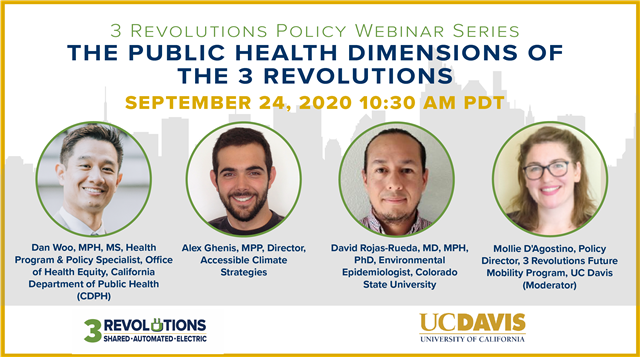
The Public Health Dimensions
of the 3 Revolutions
Thursday, September 24
10:30 am - 12:00 pm PDT
Register Here<https://gcc01.safelinks.protection.outlook.com/?url=http%3A%2F%2Fucdavis.bm…>
Transportation is a key factor influencing people's health and the health of communities, particularly for those facing inequities. Health impacts include those related to traffic safety, air quality, physical activity, and accessibility to health care services and daily needs. Automation and shared mobility could potentially improve public health and safety, or create new (or exacerbate existing) health inequities. This esteemed panel will discuss the public health dimensions of the 3 Revolutions, and how transportation policy could be steered to enable safer and more equitable travel, promote supportive environments for physical activity, reduce air pollution and carbon emissions, and increase community resilience in the face of COVID-19, climate change, and other health threats.
Panelists
[https://images.benchmarkemail.com/client479192/image9171659.jpg]
Dan Woo, MPH, MS, serves as a Health Program and Policy Specialist with the California Department of Public Health's Climate Change and Health Equity Program. He leads the Program's work on transportation policy, climate change, and health equity. Dan holds a B.S. in Design and Environmental Policy Analysis and Planning, an M.S. in Community Development, and a Master of Public Health degree, all from the University of California, Davis.
[https://images.benchmarkemail.com/client479192/image9199305.jpg]
Alex Ghenis is a disability rights consultant and the founder of Accessible Climate Strategies. His personal experience with a spinal cord injury, combined with his growing interest in climate change in the mid-2000s, led him to focus on how people with disabilities must plan for a changing world. He believes we must build a fully accessible future - including for green infrastructure, clean transportation, and climate adaptation.
[https://images.benchmarkemail.com/client479192/image9171647.png]
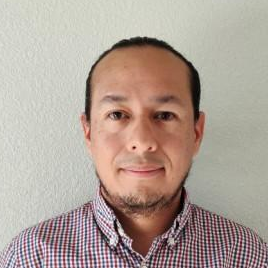
Dr. David Rojas-Rueda is an assistant professor in epidemiology at Colorado State University. David's primary research focuses on promoting a healthy urban design, supporting mitigation, and adaptation to climate change. David has over ten years of experience evaluating the health impacts of urban and transport planning policies related to air pollution, traffic noise, green spaces, heat island effects, physical activity, and traffic accidents. He has worked in several countries around Europe, Africa, Latin, and North America. David specializes in methods such as health impact assessment, populational risk assessment, the burden of disease, and citizen science. His research actively involves citizens, stakeholders, local and national authorities. He is also a member of the university's Partnership of Air Quality, Climate, and Health (PACH). He has active collaborations with the World Bank and United Nations agencies, such as the World Health Organization (WHO), the Pan-American Health Organization (PAHO), and UN-Habitat.
[https://images.benchmarkemail.com/client479192/image8905253.jpg]
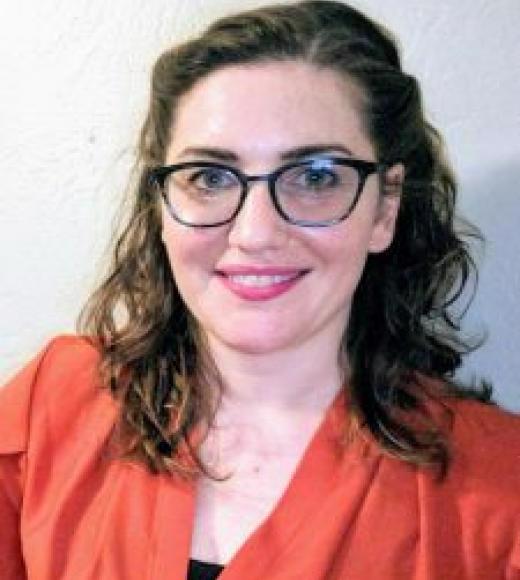
Mollie Cohen D'Agostino's work focuses on the 3 Revolutions in Transportation: vehicle sharing, electrification and increased automation. These forces are profoundly changing how we travel and may cause unknown changes to traffic congestion, equity, air pollution, and energy use. Maximizing net positive social and environmental impacts of these revolutionary forces is the mission of the 3 Revolutions Future Mobility (3R) Program. Ms. D'Agostino leads the policy outreach component of the 3R Program, and her work aims to provide an independent foundation of knowledge to decision makers. She leads the annual policy conference, legislative briefings, and other outreach events, as well as leading in the publication of policy briefs and issue papers. She has also spoken at dozens of external events and conferences to represent the 3R Program.
Register Here<https://gcc01.safelinks.protection.outlook.com/?url=http%3A%2F%2Fucdavis.bm…>
View all our upcoming webinars at
https://its.ucdavis.edu/news-and-events/webinars/<https://gcc01.safelinks.protection.outlook.com/?url=http%3A%2F%2Fucdavis.bm…>
[Institute of Transportation Studies]<https://gcc01.safelinks.protection.outlook.com/?url=http%3A%2F%2Fucdavis.bm…>
[Fraser Shilling]<https://gcc01.safelinks.protection.outlook.com/?url=http%3A%2F%2Fucdavis.bm…>
[Fraser Shilling]<https://gcc01.safelinks.protection.outlook.com/?url=http%3A%2F%2Fucdavis.bm…>
[Fraser Shilling]<https://gcc01.safelinks.protection.outlook.com/?url=http%3A%2F%2Fucdavis.bm…>
View this email in your browser<https://gcc01.safelinks.protection.outlook.com/?url=http%3A%2F%2Fucdavis.bm…>
You are receiving this email because of your relationship with ITS-Davis. Please reconfirm<https://gcc01.safelinks.protection.outlook.com/?url=http%3A%2F%2Fucdavis.bm…> your interest in receiving emails from us. If you do not wish to receive any more emails, you can unsubscribe here<https://gcc01.safelinks.protection.outlook.com/?url=http%3A%2F%2Fucdavis.bm…>.
This message was sent to travis.crayton(a)dot.gov<mailto:travis.crayton@dot.gov> by itsdavis(a)ucdavis.edu<mailto:itsdavis@ucdavis.edu>
UC Davis Institute of Transportation Studies 1650 Tilia Street, Suite 100, Davis, CA, 95616
[Unsubscribe from all mailings]<https://gcc01.safelinks.protection.outlook.com/?url=http%3A%2F%2Fucdavis.bm…>Unsubscribe<https://gcc01.safelinks.protection.outlook.com/?url=http%3A%2F%2Fucdavis.bm…> | Manage Subscription<https://gcc01.safelinks.protection.outlook.com/?url=http%3A%2F%2Fucdavis.bm…> | Forward Email<https://gcc01.safelinks.protection.outlook.com/?url=http%3A%2F%2Fucdavis.bm…> | Report Abuse<https://gcc01.safelinks.protection.outlook.com/?url=http%3A%2F%2Fucdavis.bm…>
[https://www.benchmarkemail.com/images/web4/misc/emailfooter/opt12.png]<https://gcc01.safelinks.protection.outlook.com/?url=https%3A%2F%2Fwww.bench…>
Dear colleagues,
We just published a new book on Traffic-Related Air Pollution and Human Health available through: https://lnkd.in/gYdeeyz
This was a collaboration between the Center for Advancing Research in Transportation Emissions, Energy and Health (CARTEEH) -https://www.carteeh.org/ at TTI, and the Barcelona Institute for Global Health (ISGlobal). The book is meant to cover the theory, methods and tools for assessing and quantifying road traffic emissions, air pollution, exposure, and health impacts.
Some of you might find this useful - do let me know if you would like a copy.
Best wishes,
Haneen.